Consulting hours
Monday–Friday
08h30–17h00
 69 Main Road, Muizenberg
Independent audiology · Muizenberg, Cape Town
We provide care for adults and children, from routine hearing check ups to complex middle ear problems. We listen carefully, investigate thoroughly and explain your options.
A small, independent practice. Hearing & Understanding
A little about us
Monday–Friday
08h30–17h00
Parking directly outside the practice.
Wheelchair access is available.
We work with most global brands, but we are not bound to any one brand.
Careful assessment of unexplained hearing problems.
Familiar people and clear explanations.
01 · Appointments
You do not need to choose a test yourself. Find the description closest to your concern, or tell Annick what has been happening.
Ask about an appointment ↗Whether you have noticed a gradual change, difficulty following conversation or a concern about your child’s hearing, we begin by listening to your history. Tests are selected for your age, symptoms and clinical findings. We explain the results and discuss the next step. We do not offer electrophysiological testing for children.
Blocked ears, pressure, popping and difficulty equalising can have several causes. We consider your symptoms alongside the test results, including whether the difficulty occurs when flying or diving.
A Eustachian tube that does not open properly needs a different approach from one that remains too open. No single manoeuvre diagnoses Eustachian tube dysfunction.
A small probe checks responses from your baby’s inner ears, ideally while they are settled or asleep. A “refer” screening result does not automatically mean hearing loss; we explain any follow up needed.
We provide DPOAE screening. AABR and diagnostic ABR are referred to an appropriate practitioner or centre. DPOAE screening does not replace the full newborn hearing diagnostic pathway.
We start with a diagnostic hearing assessment. If hearing aids are appropriate, we discuss your listening needs, ear anatomy, handling preferences and budget, then explain suitable styles and technology. We offer extensive trials across brands.
Try properly programmed hearing aids in your usual listening situations before deciding. Trial timing and device options are discussed individually.
Explore hearing aids and the fitting process →We review your hearing, the current fitting and the situations you find difficult. Support includes follow up adjustments, cleaning, servicing and troubleshooting. We are happy to help with devices purchased elsewhere, as long as they are still supported by the manufacturer.
Auditory rehabilitation can support speech understanding in noise, telephone use, communication strategies and adapting to hearing technology. Family involvement is welcome.
Read about fitting and aftercare →We can review previous results and arrange further testing where appropriate. Bring any previous hearing tests, ENT or scan reports, and hearing device details.
We combine your history with tests of hearing, speech understanding and ear function to guide the next step. We explain when medical investigation or a specialist referral is needed.
A blocked feeling does not always mean wax. We examine the ear first. Low pressure irrigation or manual removal may be considered when it is clinically safe.
Please tell Annick about blood thinning medication, a perforated eardrum, previous ear surgery, pain, discharge or infection before booking. We also assess age related risks before deciding whether removal is suitable. Removal is not undertaken with active infection, a perforation or blood thinner risk; medical referral may be the appropriate next step.
Custom earplugs are available for water, noise, music, sleep and specialist needs, including surfing, swimming, motorcycling, shooting and in ear monitoring.
The usual process involves an ear examination and impressions, followed by fitting and checking the finished plugs. We confirm suitable filters, compatibility and options before ordering.
We support assessment, candidacy discussions, referrals and audiological management for suitable bone conduction and middle ear hearing devices. These may be considered when conventional hearing aids are unsuitable.
Options can include non surgical bone conduction systems and selected implanted systems. Tell Annick which device you use, or bring your existing reports, so we can confirm whether an appointment here is appropriate.
Any implant surgery and medical or surgical suitability assessments are handled by the appropriate ENT surgeon and implant team.
02 · Understanding the assessment
Each test adds to your picture. We select and interpret the tests together with your history, then explain what the findings mean for you.
We examine your ear canal and eardrum for wax, infection, fluid, scarring and other changes. Video otoscopy lets you see the findings on screen.
A soft probe measures how your eardrum responds to changes in air pressure, helping us assess the middle ear system, including the small bones that carry sound. The result helps us assess fluid, pressure problems, perforations, grommets and changes in middle ear movement. We interpret it alongside your other results.
We offer screening otoacoustic emissions (OAEs), including distortion product OAEs (DPOAEs) and transient evoked OAEs (TEOAEs). A small probe records responses from the inner ear’s sensory cells. No active response is needed, making this useful for children or uncertain hearing test results.
Absent OAEs do not automatically mean hearing loss, and present OAEs do not assess the whole hearing pathway. Middle ear problems can affect the result.
We measure the middle ear’s automatic muscle response to sound. This adds information about the hearing pathway, particularly when other results do not agree.
These tests assess how the middle ear regulates pressure. A tube that does not open well and one that stays too open can cause different problems. No single manoeuvre diagnoses Eustachian tube dysfunction on its own.
In our large, modern soundproof booth, we measure the quietest sounds you can hear. Air and bone conduction tests help identify the type of hearing loss. We offer various types of probes, headphones and free field testing based on your needs.
We assess how you hear and understand speech, including in background noise where appropriate. This helps guide hearing aid recommendations and explain everyday listening difficulties.
Diagnostic ABR, AABR, ECochG, VEMP, formal vestibular testing and formal auditory processing disorder (APD) assessment are not provided at the practice. We explain when referral is needed.
03 · Conditions & hearing care
You do not need a diagnosis before booking. We assess hearing and ear function, explain the findings and help plan your care. Some conditions also need medical or surgical care with an ENT specialist.
Otosclerosis can restrict the movement of the stapes, one of the small middle ear bones, making it harder for sound to reach the inner ear.
We assess hearing and middle ear function, monitor changes and discuss hearing aids where appropriate. An ENT specialist can advise on diagnosis and surgical options.
A Eustachian tube that does not open properly can cause pressure, popping or difficulty equalising. A tube that remains too open, called patulous dysfunction, can make your own voice or breathing sound unusually loud.
We investigate hearing and middle ear function alongside your symptoms, including problems when flying or diving. The findings guide monitoring, advice and any ENT referral.
Ménière’s disease can involve episodes of vertigo, fluctuating hearing loss, tinnitus and ear fullness. It is associated with excess fluid in the inner ear, called endolymphatic hydrops.
We assess and monitor hearing and support hearing care alongside your ENT specialist. Formal vestibular testing and ECochG are referred to an appropriate provider.
A gap in the bone over the superior semicircular canal can change how sound and pressure affect the inner ear. Some people hear their own voice or internal sounds unusually loudly, or experience dizziness triggered by sound or pressure.
We assess the hearing findings and guide specialist referral for confirmation. CT imaging and VEMP testing, when indicated, are performed elsewhere.
A sudden loss of hearing can be mistaken for wax or a blocked ear. Seek urgent medical assessment immediately rather than waiting for a routine appointment or a message reply.
We can document and monitor your hearing and support hearing rehabilitation alongside medical care. The practice is not an emergency service.
Repeated cold water exposure can lead to bony growths in the ear canal. These can narrow the canal and trap water or wax, sometimes affecting hearing or contributing to recurrent ear problems.
We examine the ear canal, assess any effect on hearing and discuss suitable water protection. Significant narrowing or recurring problems may need an ENT assessment.
Tinnitus is the perception of sound when there is no external sound source. It can occur with or without noticeable hearing difficulty and may affect sleep or concentration.
We consider your history, hearing, ear health and the effect on daily life, then explain the findings and discuss management or referral options. Hearing support and practical listening strategies may form part of your plan.
Loud sound can damage the inner ear and cause temporary or lasting hearing changes. Exposure may happen at work, through music, shooting or other activities.
We assess hearing, discuss suitable protection and help manage any ongoing hearing needs. A sudden change after loud noise needs urgent medical assessment.
Difficulty following speech, particularly in noise, can occur even when hearing thresholds are within the normal range. Several factors can contribute, so these difficulties need careful assessment.
We assess hearing and speech understanding where appropriate and explain the next steps. Formal auditory processing disorder (APD) assessment is not provided at the practice; we refer when it is indicated.
04 · Hearing aids in Muizenberg
Independent advice, time to try hearing aids in daily life and support after fitting. We also explain when hearing aids may not be the right next step.
We consider your hearing, ear health and everyday listening needs.
We explain suitable brands, styles and technology within your budget.
Trials, fitting, follow up adjustments and ongoing care.
05 · Brands & selected models
We work with Oticon, Phonak, Starkey, Signia, Widex, ReSound, Unitron and Rexton. The recommendation follows the assessment.
These are selected examples to help explain the options. We confirm suitability, South African availability, features and pricing individually.
 Oticon Zeal · Oticon Reveal
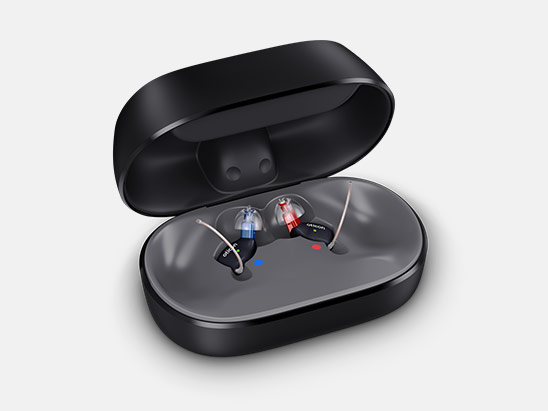
A discreet in ear design with rechargeable power and wireless connectivity. Ear anatomy and hearing needs determine whether this style is suitable.
Oticon product information ↗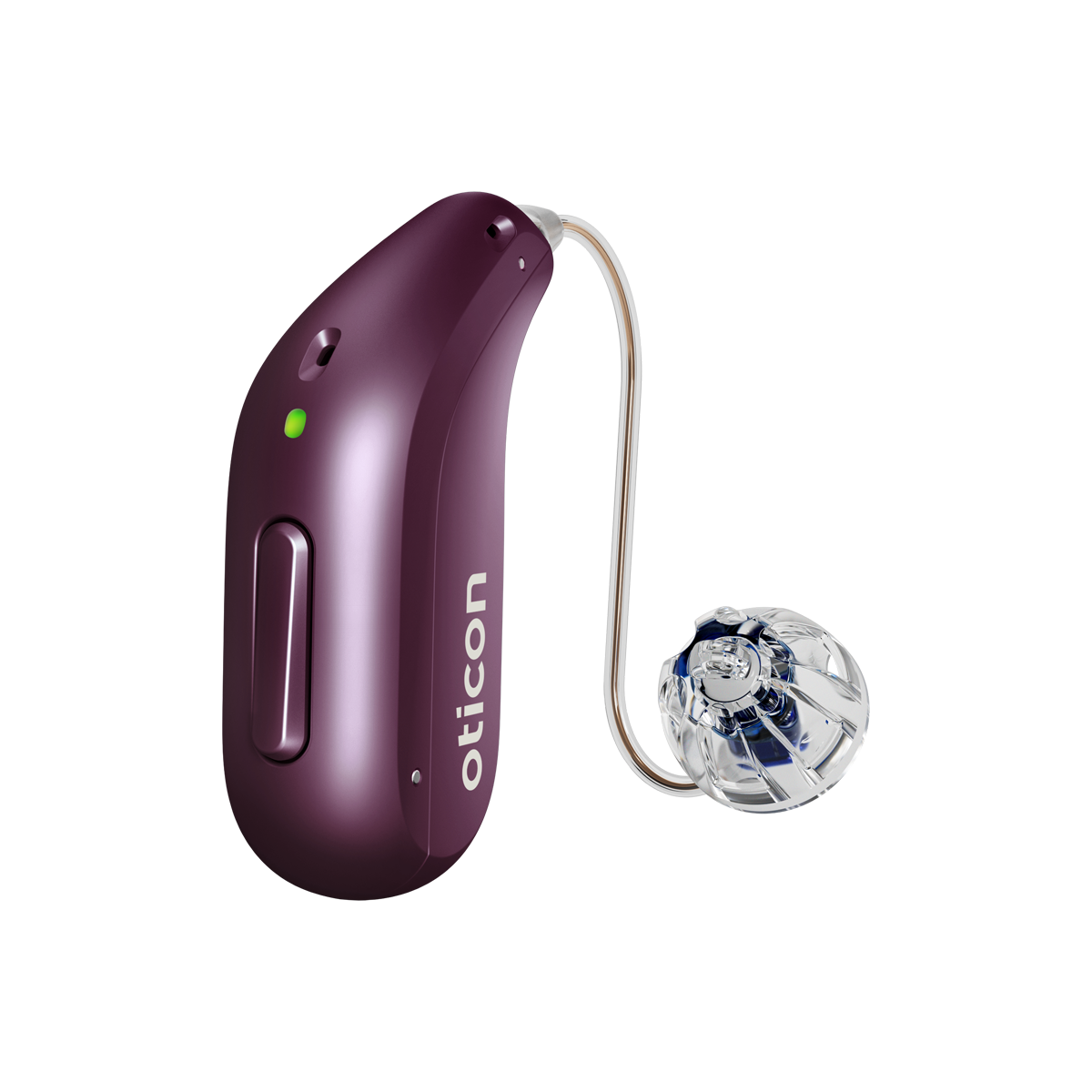
A receiver in ear family with separate processing for speech and surrounding sound, rechargeable power and connectivity for compatible devices.
Oticon product information ↗ Audéo EON Sphere · Virto R Infinio · Sky Lumity
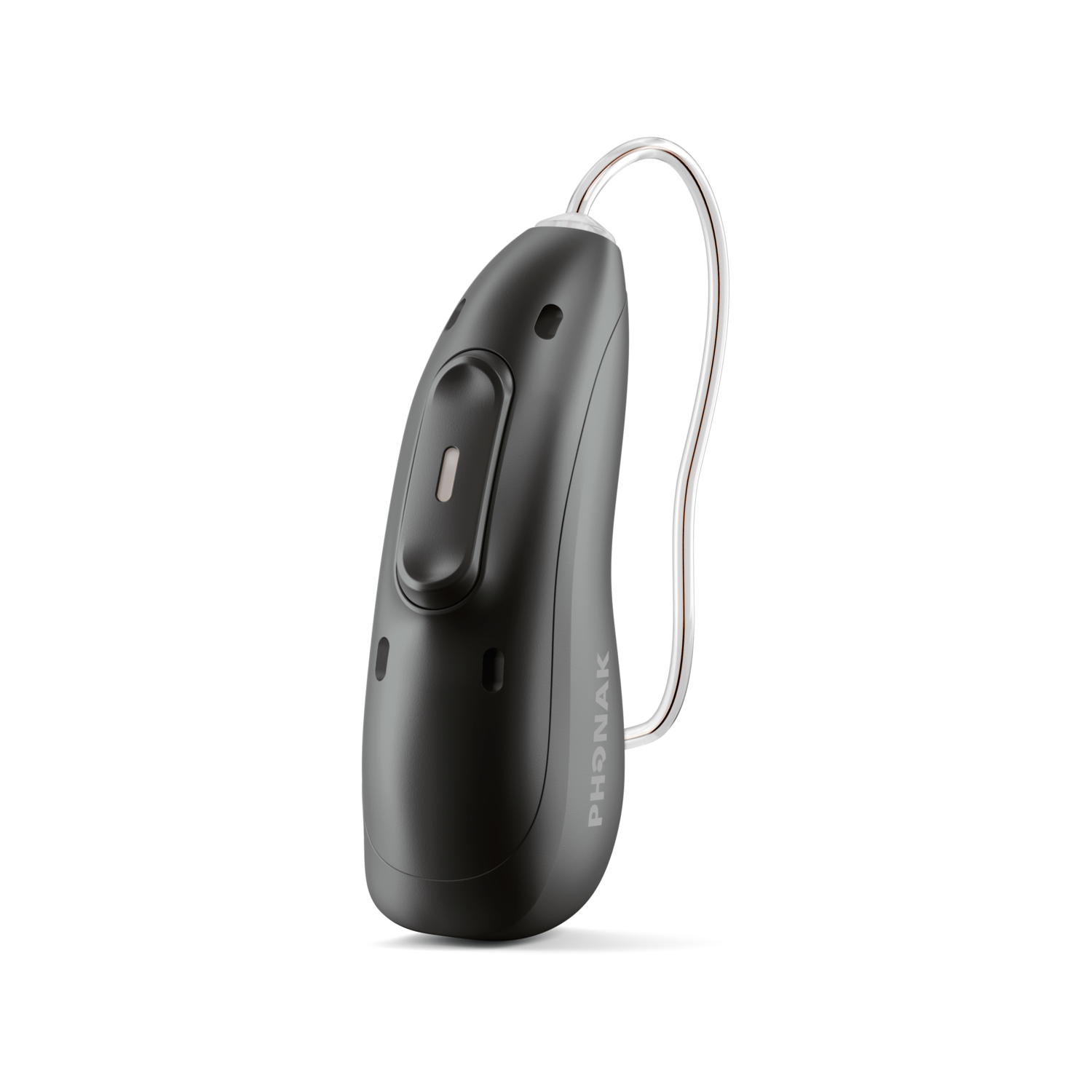
A rechargeable receiver in canal model with AI processing designed to separate speech from background noise. Bluetooth connectivity and Auracast broadcast audio support listening across compatible devices and venues.
Phonak product information ↗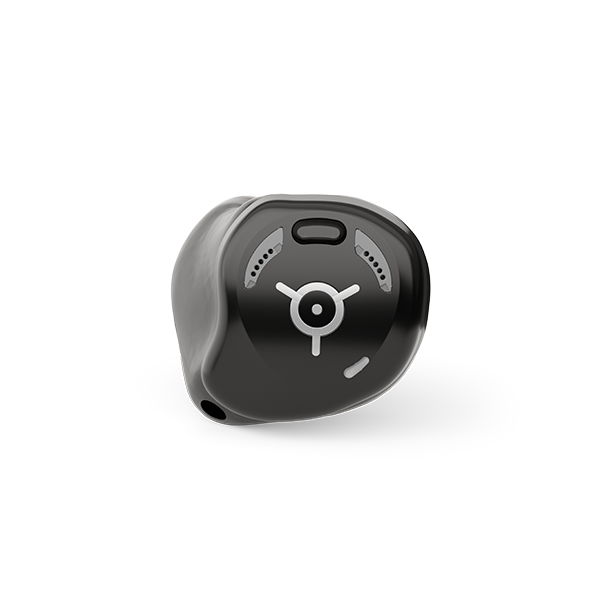
Made for the individual ear, with rechargeable power, magnetic charging and Bluetooth connectivity. A custom shell is considered alongside hearing needs and handling preferences.
Phonak product information ↗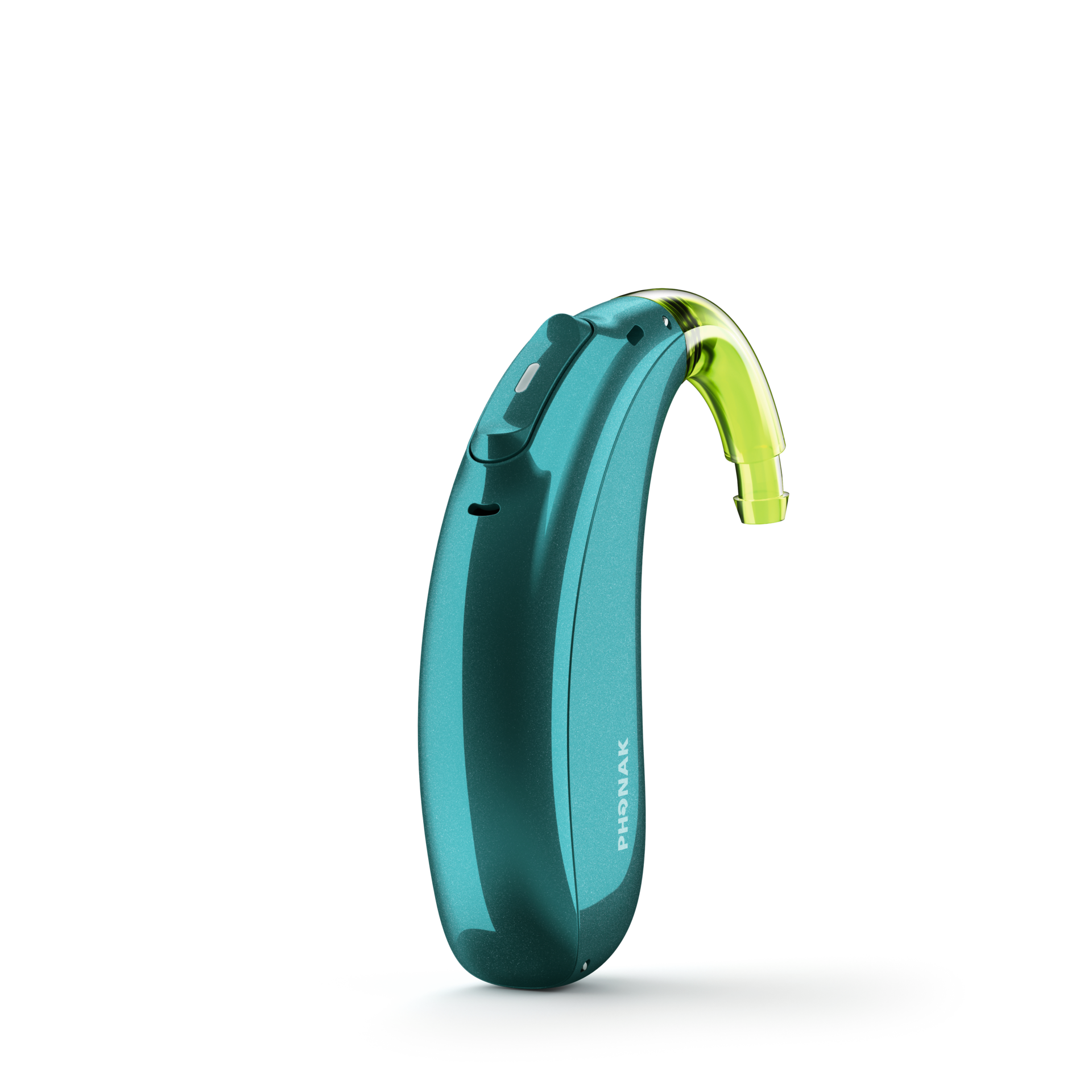
A behind the ear family designed for children, with options for everyday listening and classroom connectivity. The device, earmould and accessories are selected individually.
Phonak product information ↗ Signature Series IIC
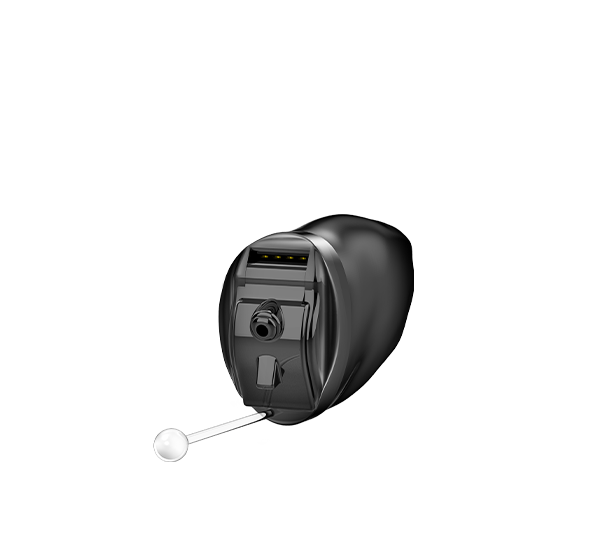
A small custom device that sits in the ear canal. Visibility and suitability depend on the individual ear. The wider Signature Series also includes completely in canal styles, including a rechargeable option.
Starkey product information ↗ Pure Charge&Go MaX
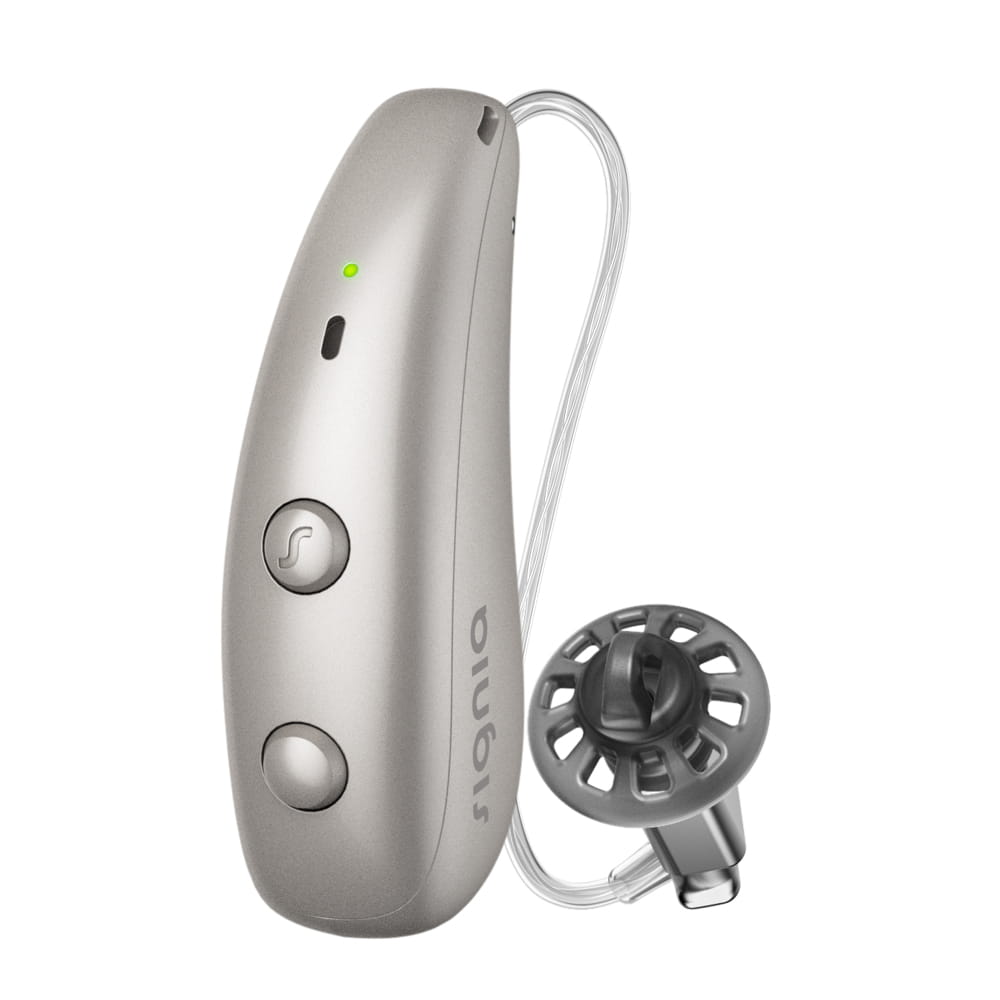
A rechargeable receiver in canal model on Signia’s Multi-adaptive Xperience platform. Its AI processing is designed to follow group conversations, manage background noise and support a natural perception of your own voice.
Signia product information ↗ Allure RIC R D
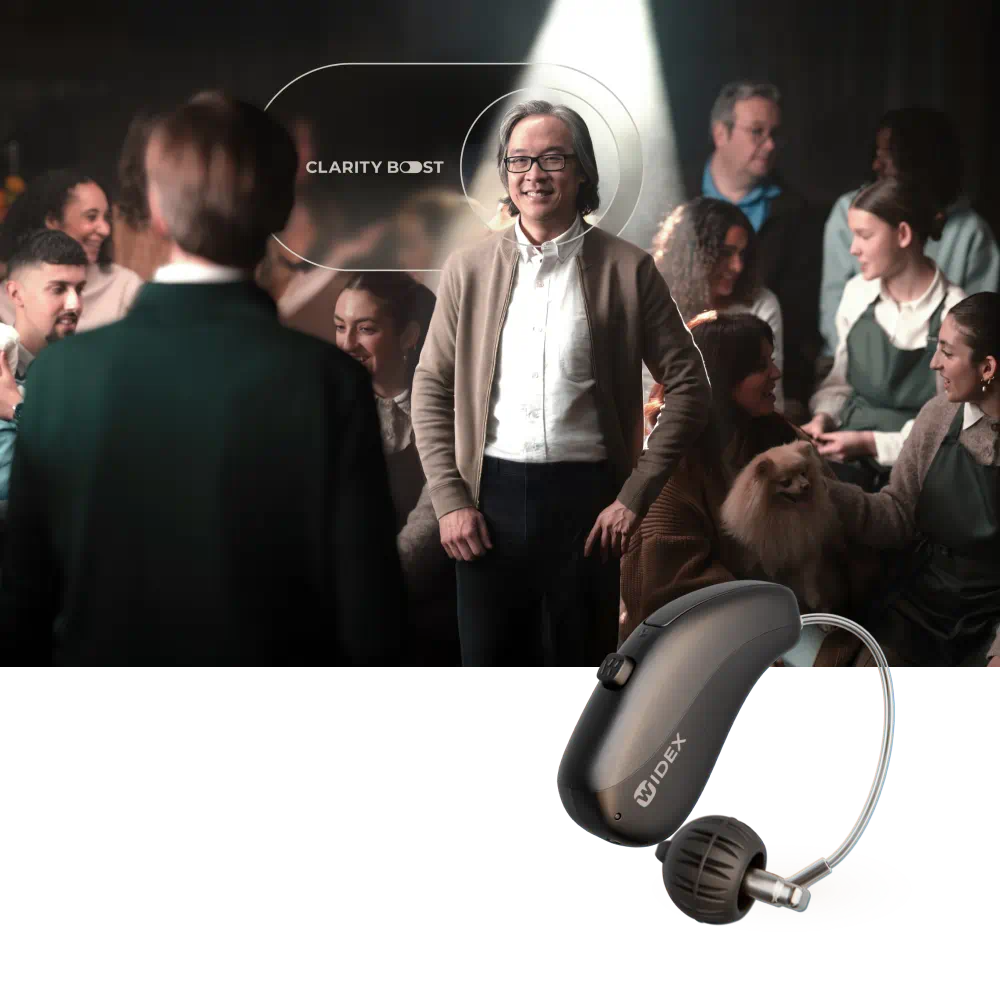
A receiver in canal option on the Allure platform, combining speech support and low delay sound processing. The Allure family also includes behind the ear and in the ear designs.
Widex product information ↗ ReSound Vivia
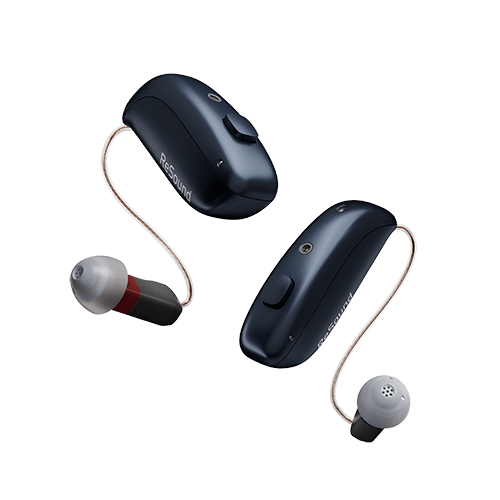
A receiver in ear family with AI supported noise processing, Bluetooth LE Audio and Auracast. Rechargeable and replaceable battery styles are available within the range; features depend on the selected model.
ReSound product information ↗ Moxi S-R
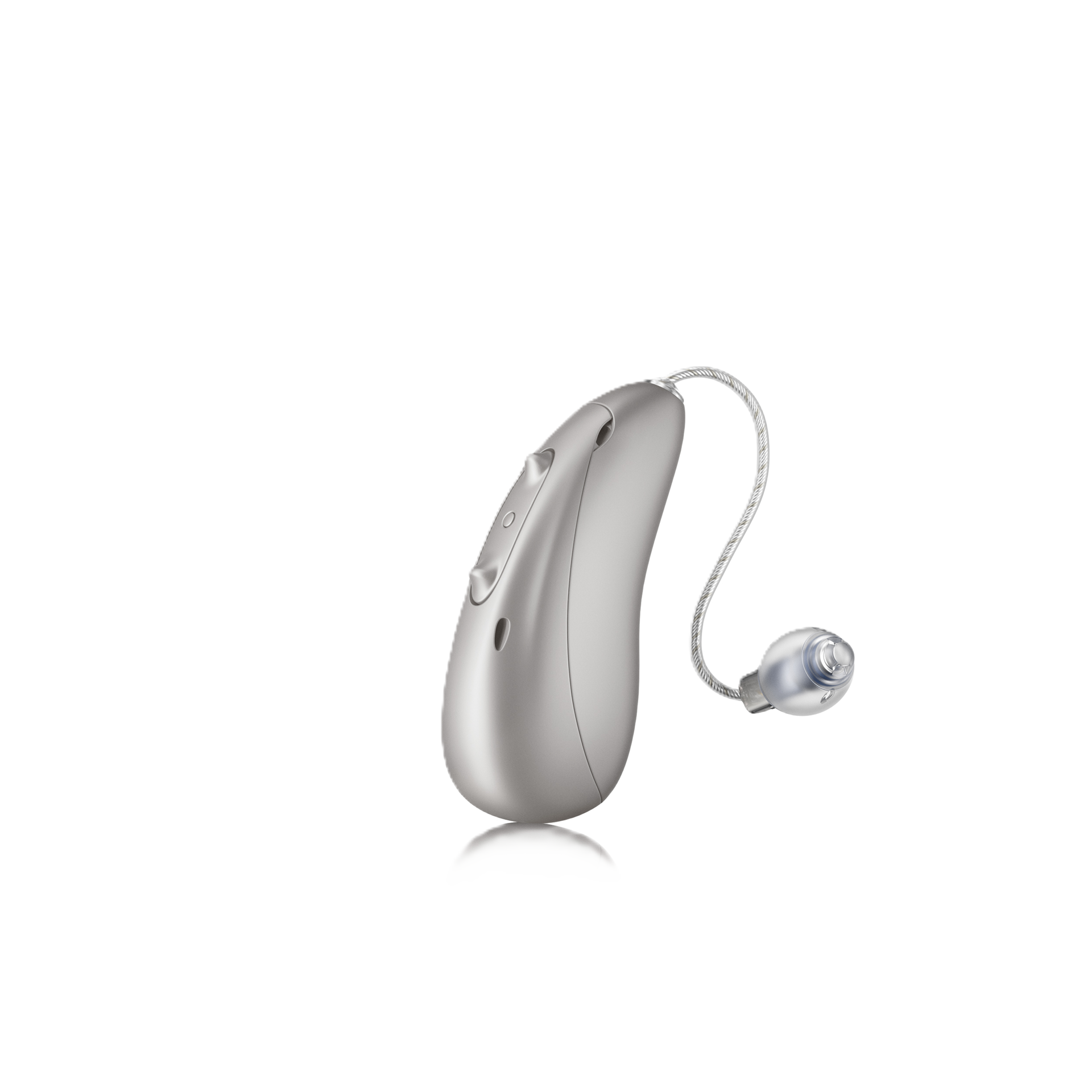
A rechargeable model on the Smile platform, with Bluetooth connectivity and the Remote Plus app. We discuss technology levels, listening needs and suitable charging options.
Unitron product information ↗ Reach R-Li / R-Li T · Reach Rugged
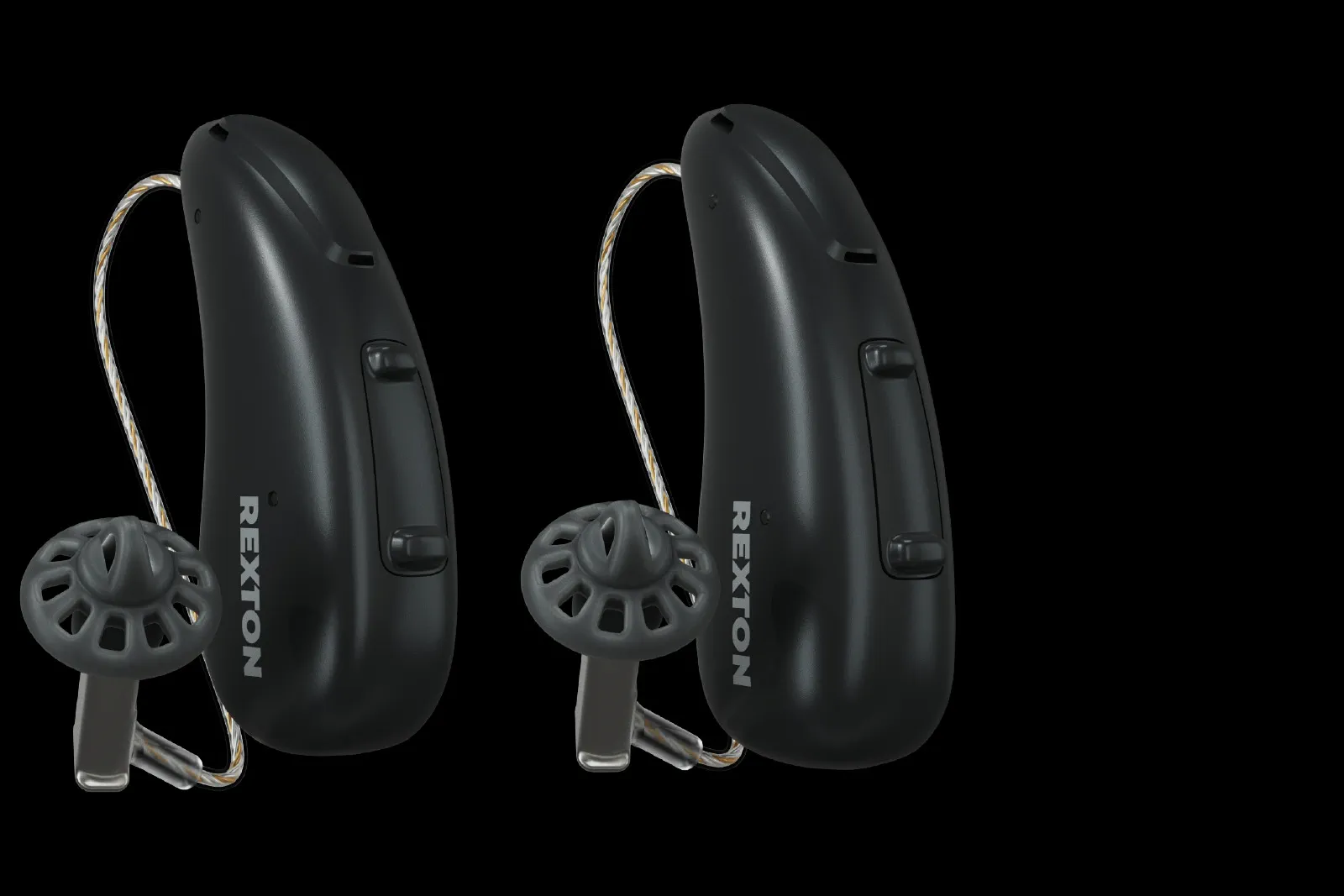
A rechargeable RIC family with Multi-Voice Focus processing and connectivity for compatible smartphones. The R-Li T variant adds a telecoil for use with compatible hearing loops.
Rexton product information ↗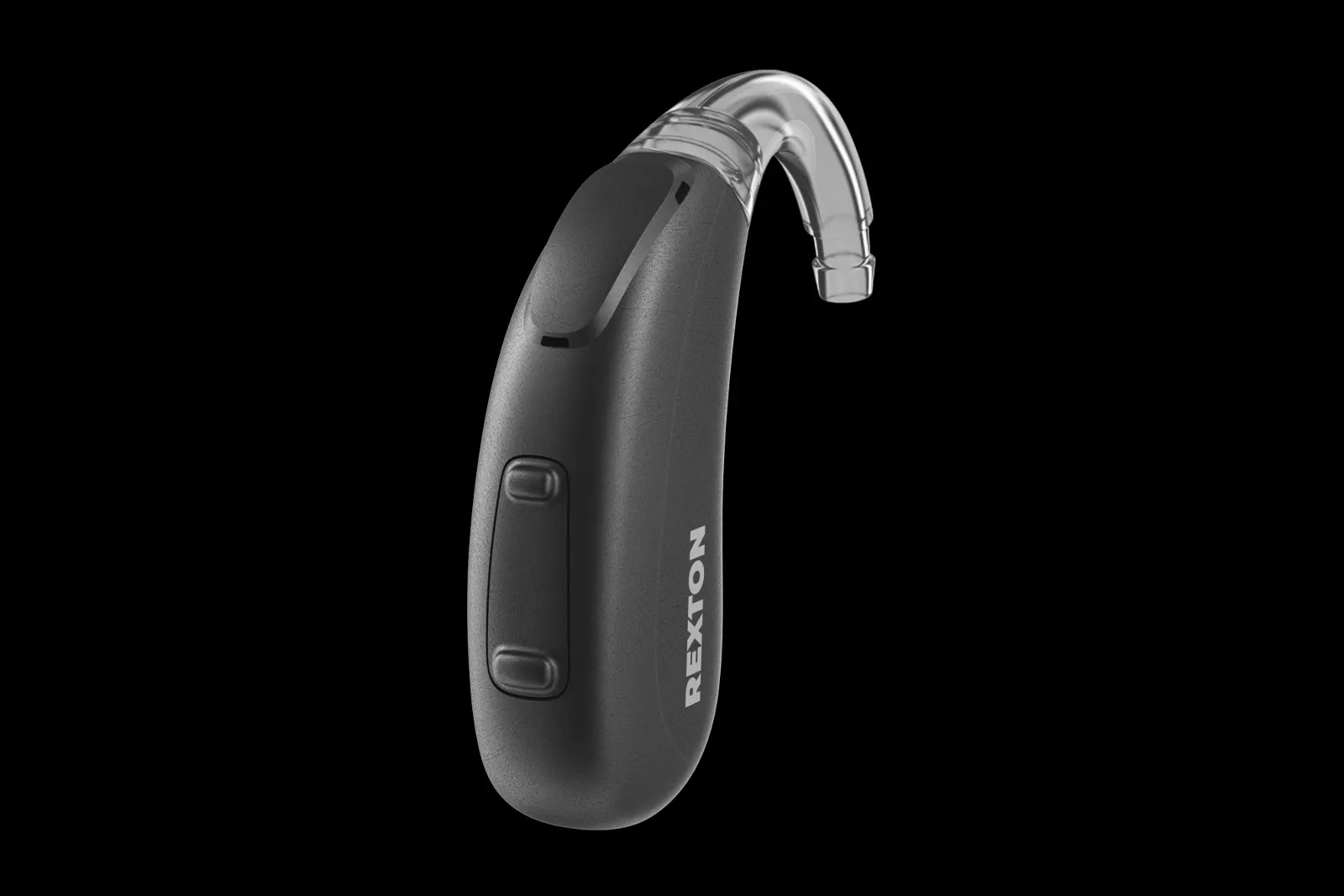
A rechargeable behind the ear model with Multi-Voice Focus and a reinforced, sealed housing for an active lifestyle. It is tested for water resistance to 2 metres for up to 30 minutes; we explain the care guidance and limits before fitting.
Rexton product information ↗Explore a brand to see its models. Product links lead to the manufacturer’s information.
06 · Ongoing care & support
Our care includes hearing follow up after ear surgery, annual monitoring and support with specialist referrals. We also help with hearing aid trials, fitting and ongoing aftercare.
We provide hearing assessments and follow up after ear surgery, in line with your ENT specialist’s recommendations. We explain changes in your hearing and discuss any ongoing hearing support you may need.
Annual hearing reviews give us an opportunity to compare your results, discuss changes in everyday listening and review your care plan. Follow up timing is agreed individually.
We help you understand when further investigation or specialist care is needed, explain your hearing assessment findings and support the referral process. We can help you make sense of the recommendations and plan your ongoing hearing care.
Try properly programmed hearing aids in your usual listening situations before deciding. Another style, brand or technology level may be trialled where needed. Trial timing is discussed case by case.
We adjust the fitting using your feedback, follow up results and verification where appropriate. Real ear measurement uses a slim probe microphone to measure sound in your ear canal; we use this where clinically indicated, including complex or difficult fittings.
Tell Annick your device brand and model so we can confirm the support available.
Device style, technology level and the care required affect the quotation. We discuss your budget and the expected benefit of suitable options before you decide.
We submit claims for hearing aids and selected consultations, depending on your medical aid and plan. Please contact Annick to confirm benefits, authorisation requirements, payment arrangements and what is included in your quotation.
Discuss costs with Annick →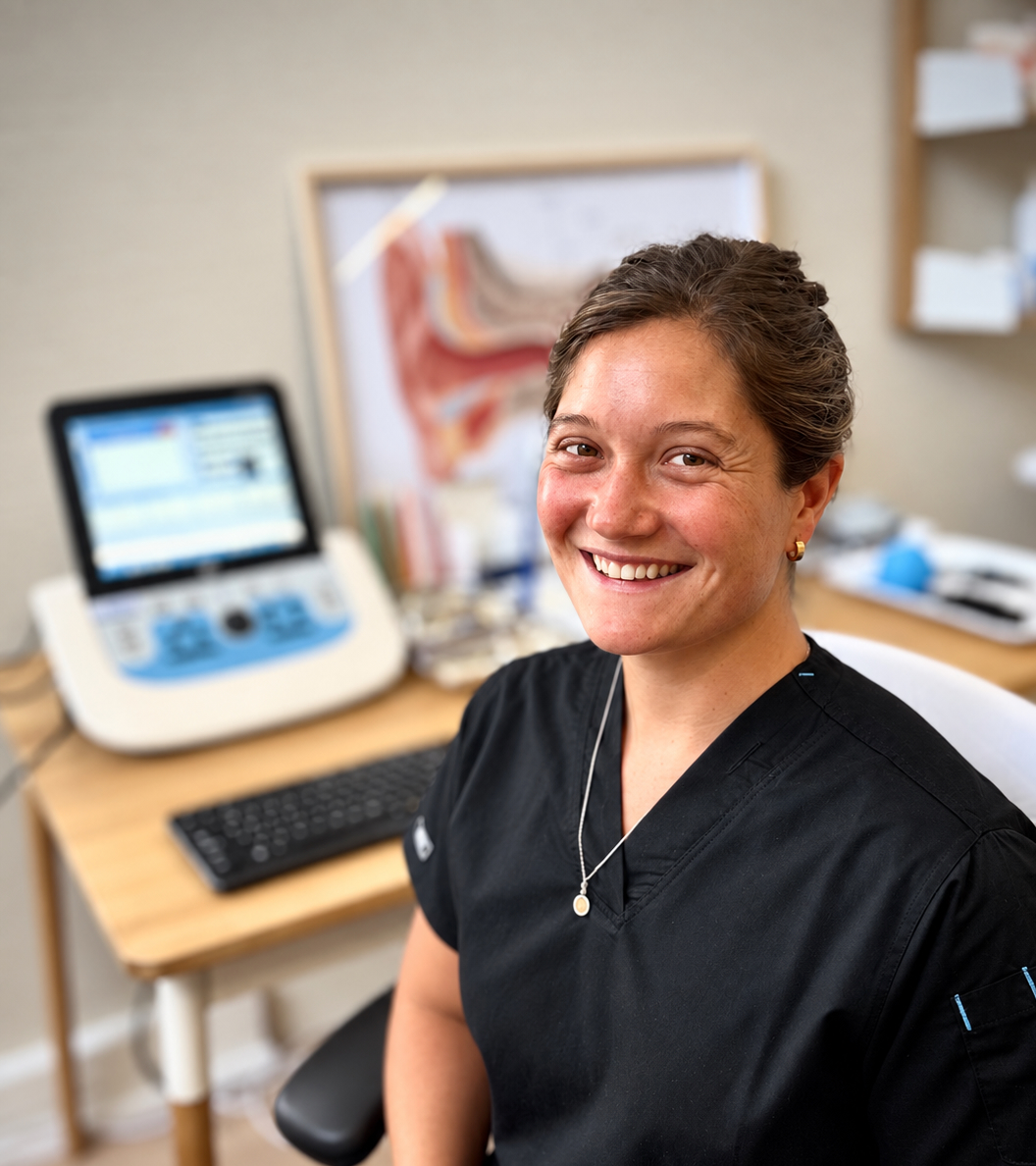
Meet Megan
Megan is a UCT trained audiologist with a particular interest in complex hearing diagnostics and middle ear conditions. She opened her private practice in Cape Town in 2018 and has taught at both UCT and Stellenbosch University.
Arrange a visit ↗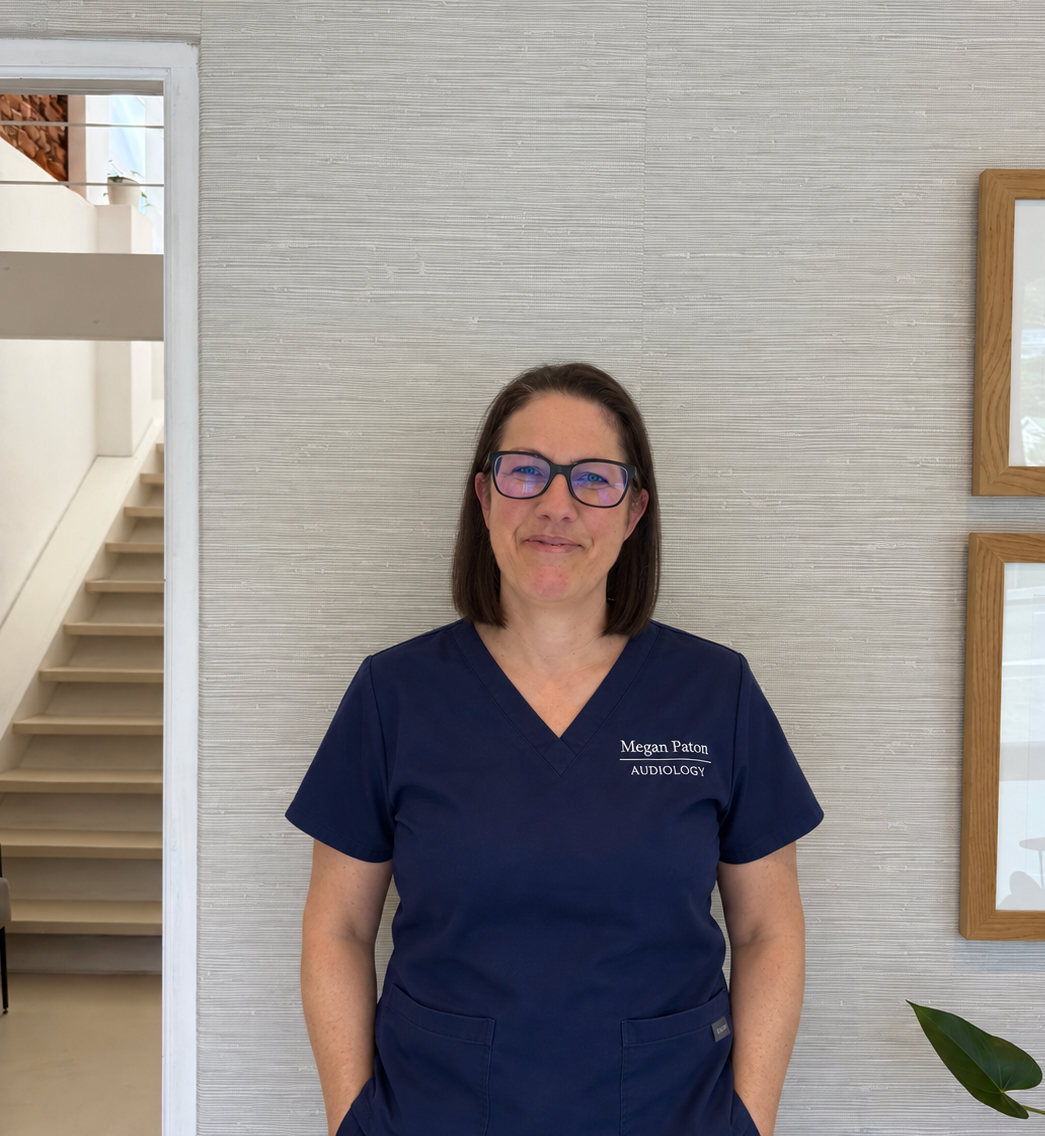
Your first point of contact
Appointments & enquiries
Annick can help you choose an appointment.
Annick, our practice manager, helps with appointments, billing and medical aid queries. Call, WhatsApp or email her to arrange your visit.
reception@meganpatonaudiology.co.za69 Main Road, Muizenberg, Cape Town.
Monday–Friday · 08h30–17h00